
The Limitations of Standalone Symptom Checking
Most symptom checking tools follow a predictable pattern: collect symptoms, process against a database, return possible conditions with generic advice. While this approach provides reassurance, it often leaves patients in the same position they started—uncertain about their next step.
The fundamental limitation is that symptom checking treats healthcare as an information problem rather than a decision problem. Patients typically know something is wrong. What they need is structured guidance through the complexity of healthcare options, appointment availability, insurance coverage, and clinical urgency.
Healthcare leaders are recognising that engagement metrics like page views or session duration do not translate to meaningful health outcomes. A patient who spends twenty minutes reading about possible causes of chest pain but delays seeking appropriate care represents a failure of the digital health experience, regardless of how thoroughly they engaged with the content.
From Information to Decision Support
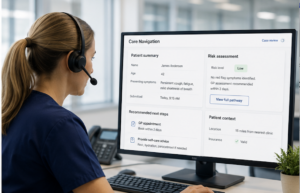 Care navigation addresses this gap by focusing on the decision architecture surrounding health concerns. Instead of presenting information for patients to interpret, navigation platforms guide users through structured pathways that account for clinical risk, available resources, and individual circumstances.
This approach requires understanding that healthcare decisions involve multiple variables beyond clinical symptoms. Patients consider factors like appointment availability, travel distance, cost implications, work schedules, and family responsibilities. Effective care navigation incorporates these practical constraints into the guidance framework.
The most successful digital health platforms are those that can move seamlessly from initial query to actionable next step. This might involve booking an appointment, connecting with a pharmacist, initiating a telehealth consultation, or providing structured self-care guidance with clear escalation triggers.
Clinical Governance in Navigation Systems
The transition from symptom checking to care navigation introduces important clinical governance considerations. When platforms move beyond information provision to active guidance, they assume greater responsibility for patient outcomes.
Robust navigation systems incorporate clinical oversight at multiple levels. This includes evidence-based pathway development, regular clinical review of guidance algorithms, and clear escalation protocols for high-risk presentations. The goal is not to replace clinical judgement but to ensure that initial guidance aligns with established clinical standards.
Healthcare organisations implementing navigation solutions must establish clear accountability frameworks. This includes defining the scope of guidance provided, establishing clinical review processes, and maintaining audit trails for quality assurance purposes.
Human Oversight in Automated Systems

While technology enables sophisticated symptom analysis and pathway guidance, human clinical oversight remains essential. The most effective navigation platforms combine automated initial assessment with human clinician review, particularly for complex or high-risk presentations.
This hybrid approach allows platforms to provide immediate guidance while maintaining clinical safety standards. It also enables continuous learning and refinement of automated systems based on real-world clinical outcomes.
Reducing Drop-off Through Care Orchestration
One of the strongest advantages of navigation over traditional symptom checking is the ability to orchestrate the entire care journey. Rather than ending the interaction with generic advice, navigation platforms can facilitate appointment booking, insurance verification, and care coordination.
This orchestration capability is particularly valuable for healthcare insurers and integrated delivery systems. By maintaining engagement through the complete care pathway, these organisations can improve member satisfaction, reduce inappropriate emergency department utilisation, and enhance overall care efficiency.
Effective care orchestration requires integration with existing healthcare infrastructure. This includes electronic health records, appointment scheduling systems, insurance databases, and provider networks. The technical complexity is significant, but the potential for improved patient experience and clinical outcomes justifies the investment.
Measuring Success Beyond Engagement
The shift to care navigation requires new success metrics that align with healthcare outcomes rather than digital engagement. Traditional web analytics provide limited insight into whether digital interactions translate to appropriate care decisions.
More meaningful metrics include time from initial query to appropriate care, reduction in emergency department visits for non-urgent conditions, patient satisfaction with care coordination, and clinical outcomes following digital guidance. These metrics require longer observation periods but provide clearer insight into platform effectiveness.
Healthcare leaders should also consider measuring care pathway completion rates, provider satisfaction with referred patients, and cost-effectiveness of digital navigation compared to traditional care access methods.
Strategic Implications for Healthcare Organisations
The evolution from symptom checking to care navigation represents a strategic inflection point for healthcare organisations. Those that successfully implement navigation capabilities will own the critical first contact moment and guide patients through their preferred care pathways.
For insurers, this capability enables better steerage to cost-effective care options while maintaining member satisfaction. For healthcare providers, navigation can improve patient flow and reduce administrative burden associated with inappropriate care seeking.
The competitive advantage will belong to organisations that can combine clinical excellence with operational efficiency in their navigation platforms. This requires investment in both technology infrastructure and clinical governance capabilities.
MeditSimple understands that effective healthcare navigation requires more than sophisticated algorithms—it demands clinical oversight, care orchestration, and outcome accountability. Our platform combines automated guidance with human clinician review to ensure that every patient interaction leads to appropriate, timely care decisions.
